Saturday, 30 April 2011

Latest Computer Hardware

Latest Computer Hardware
Nowadays, we live in a world of technology. In every field every person wants to find out information about the latest technology. The same happens with computers and computer technology. Users want to be able to find out as much as possible about what is new and how they can buy new components for their computers and whether these components are appropriate for their computers or not. Latest computer hardware has been considered important by many of the users who have tried to get well informed about their computers, the things that they can improve and the way in which they can properly work with their computers.

The technology advances very fast these days, because there is a high request from users who want to be able to do as much as possible with the aid of their computers. There are also many companies who manufacture computers and computer components nowadays and who are daily trying to discover and create something new in the computer technology so that they might attract more clients. There are many offers, many products, many companies and sometimes it is very hard for the users to be able to choose what is best for them, what would be the most appropriate choice to work easier and properly and also to have fun and spend our spare time. The latest computer hardware technology is of great interest for those users who really want to have a good computer and to be acquainted to all the important aspects related to them.

In what concerns the latest computer hardware technology, users have become very interested in the latest storage devices that can offer them the possibility to store much more data on their computers. This is very important as in the past we did not have the possibility to store so much information on our computers, even if we needed it many times. Nowadays, there is a higher need of great amounts of data being stored on our computers both for work and for having fun and, in this way, the latest data storage devices have been very well appreciated by the users. There are many new types of storage devices that have appeared in the last few years, such as the flash type of memory cards, the hard disks that use latest technology and disks that over increased in capacity. These devices have been well received by many of the users who needed them and are nowadays already used by many people. Every day, specialists are trying to create newer types of data storage devices that might answer the user' requests.


A very important computer component is considered by specialists and users to be the microprocessor. In this respect, the latest computer hardware technology has included some important changes within the microprocessors. There are two main companies manufacturing this type of computer components which are very well known among users and which are always trying to create something new and better so as to attract more clients. These two companies are Intel and AMD.


A very interesting aspect concerning the latest computer hardware technology is whether all that is new is necessarily better or worth paying more money for. The companies manufacturing new computer components and peripherals present very good offers, in which the new products seem to be much better and worthy of any price that might be required for its purchase. Unfortunately, it is not always the case. The users must get well informed before letting themselves influenced into buying one product or another and risking to be misled into buying something for which they might pay more than they should just because it is new.
 The usual way in which we can nowadays become aware of certain differences between the newest computer components and devices and their previous versions can be done by running certain tests or software applications. The difference is not as noticeable as it used to be between the old components and the new ones that appeared in the same time that technology started to improve. Nowadays, the latest computer hardware technology keeps on changing very often, as many so called new products are daily being presented by different companies. The idea of new has somehow become different from the term of really innovative used in the past.
Furthermore, when discussing about latest computer hardware technology, it is also very important for the users to become aware of the necessity to make a difference between wanting a new computer component, needing one and between the important differences existing between a new device and its previous model. This is important because by being well informed the users can avoid the situation in which they buy a new product for which they pay much more money just because it is new, even if that product is not necessarily much better than the previous model which costs less. This is an important aspect. It has happened very often the situation in which users have bought some new computer components just because they wanted to have access to the latest computer hardware technology. Afterwards, they realized that there were not really big differences between the new product and the one they used previously and that if they had been better informed they would have realized the fact that they did no really need the new product taking in account the type of activities that he or she daily does with his or her computer.
 
As a conclusion, it is important to say that because we live in a world of technology it is very important for many users to have access to the latest computer hardware technology. This is because many of the users need the latest computer hardware components to be able to do certain activities involving their work. These components can really help them do certain tasks much easier. On the other hand, it is also important for the users to become aware of the necessity that they must get well informed before purchasing one product or another. This is very important because in this way they can avoid any unnecessary risks of being misled into buying something that it is not really necessary for them and for which they are asked to pay a big sum of money.

Source Link:- http://www.warepin.com/

Cloud Computing On The Top Of Latest Technologies 2011

Cloud computing is a technology that uses the internet and central remote servers to maintain data and applications. Cloud computing allows consumers and businesses to use applications without installation and access their personal files any computer with internet access. This technology allows for much more efficient computing by centralizing storage, memory, processing and bandwidth.

“The fact that cloud computing is scalable and elastic, self-service, multitenant and is a metered usage based data resource centre makes it very interesting for seasonal businesses, because they can add and remove capacity as per requirement”, said Atilla Szenvedi.

As an example, he explained how the e-filing system of the Mauritius Revenue Authority can benefit from additional capacities to process the tax forms during peak time if it were to use the services of cloud computing.

Understanding how cloud computing works is simple: it implies using the Internet, accessing information from a distant server without actually having the software. As a result, the usage of cloud computing is very economical, explained Atilla Szenvedi. It is thus possible to use the service completely without having to invest in the equipment, software and competencies. It is a technological revolution, an extension of the virtualization concept to use the physical capacities of the machine efficiently.

Hence, cloud computing increases capacity without having to invest in new infrastructures, training new people or getting new software. It makes it easier for users to have access to all computer services without having to deal with the details of how it really works. A typical example of cloud computing is Yahoo email or Gmail. The user does not need a software or a server to use them. All a consumer needs is internet connection and he can start sending emails. The server and email management software is all on the cloud (internet) and is totally managed by the cloud service provider Yahoo, Google etc. The consumer gets to use the software alone and enjoy the benefits.

Atilla Szenvedi adds that cloud computing relates to the philosophy of Microsoft which is to: “to give people tools to do business and achieve efficiency”.

As far as private cloud computing is concerned, there are three different ways to have access to it: the server is either used on the site of the private enterprise, or by a local partner or through a global data centre. In Mauritius, Microsoft works in collaboration with Mauritius Telecom to offer the service of cloud computing to its clients.  The challenges of this new technological service are numerous, said Atilla Szenvedi.

“Geolocation of data, limitation of bandwidth and infrastructure reliability are the challenges to overcome”, he added. In fact, there are organisations which have legal constraints to restrict the information within the organisation, such as banks.

“We, at Microsoft, want to give people the tools and the technologies to realise their potentials. For this, we invest $9.6 billion in Research and Development,” he said.

Source Link:- http://www.defimedia.info/articles/3560/1/Technology-news-Cloud-computing-on-the-top-of-latest-technologies-2011/Page1.html

Wednesday, 20 April 2011

HTC Has Introduces The New Merge QWERTY Android Phone Heading To Alltel

HTC is well-known company for its several fantastic new products it has earlier offered so many mobile phones and other gadgets in the market and now again it comes with its another new phone well guys recently HTC has introduced the Merge (aka Lexikon), an Android smartphone with sliding QWERTY keyboardfor rapid text input.

The phone is to be released by Alltel. The phone is runs Android 2.2 with HTC Sense UI and powered by a Qualcomm 800MHz processor. It is HTC’s first Android-based CDMA world phone, meaning it as well supports GSM/WCDMA network for roaming. 

These days there is lots of Android phones are available in the market but HTC is also one of the best company in market The HTC Merge features a 5 Megapixel camera with 720p video recording capability, a 3.8-inch large touchscreen display, GPS, Bluetooth and WiFi connectivity.

Latest V-Touch 8GB Touchscreen MP3 / MP4 Player

 Latest V-Touch 8GB Touchscreen MP3 / MP4 Player
 Here is the latest V-Touch 8GB Touchscreen MP3 / MP4 Player Presents in market with including excellent features this is the latest technology of amazing touch screen player you can easily enjoy lots of latest tracks anytime it is available in great color and design it is best for taking traveling I have a big craze of music I would like to listen my favorite songs tracks.

The new V-Touch 8GB Touchscreen MP3 / MP4 Player has including amazing features miniSD card slot, compatibility with AVI, up to 10 hours of audio playback, PNG file formats, FM radio, MP3, USB connectivity, compatibility with AVI, JPG,BMP, WMA, AVI, GIF, MPEG-4, Video recorder, 2-megapixel camera, a 2.8″ touchscreen LCD, three hours of video per charge. It has also including some additional functions it has 52mm x 90mm x 14mm dimensions it is supported Mini Secure Digital Card, Wall Charger, Stylus, Headphones, Wall Charger, Carrying Pouch.

 Latest V-Touch 8GB Touchscreen MP3 / MP4 Player

It has great battery functions Up to 12 Hours of Audio Playback; Up to 3 Hours of Video Playback, Voice Recording up to 1500 Hours it Works as a USB Flash Drive for taking your files on the go it also offer Picture Viewer, E-book Function and more and Built-In Lithium Battery last up to 10 hours this is such a great touch screen player it is available in $59.99. So are you ready to buy if yes then get ready don’t miss this chance!

Latest V-Touch 8GB Touchscreen MP3 / MP4 Player

Tuesday, 19 April 2011

Apple Sues Samsung, Says Its Galaxy Tab Copied iPad

Apple alleges that the Galaxy Tab and many Samsung smartphones violated its patents and trademarks


Apple has sued Samsung for allegedly copying the iPad, iPod, and iPhone with its Galaxy Tab and Galaxy handsets.

Samsung copied Apple technologies, designs and even packaging with its Google Android-based products, according to a complaint filed Friday in the U.S. District Court for the Northern District of California. Apple is seeking a jury trial in the case

"Instead of pursuing independent product development, Samsung has chosen to slavishly copy Apple's innovative technology, distinctive user interfaces, and elegant and distinctive product and packaging design, in violation of Apple's valuable intellectual property rights," Apple said in the complaint.

Late last year, Samsung became the first major consumer electronics maker to roll out a tablet to compete with the iPad. It is also one of the world's largest makers of mobile phones, especially handsets that use Android.

The complaint includes 10 charges of patent infringement, two of trademark violation and two of trade dress violations, plus unjust enrichment and unfair business practices. Apple named Samsung Electronics, Samsung America and Samsung Telecommunications America as defendants. The case was filed at the district court in San Francisco but is being transferred to Magistrate Judge Laurel Beeler at the court's Oakland, California, location.

A spokesman for Samsung in the U.S. said the company had no comment on the lawsuit. Apple officials could not immediately be reached for comment.

The allegations span a broad range of Samsung's mobile devices, including the Epic 4G, Captivate, Indulge, Nexus S and Galaxy S 4G smartphones as well as the Galaxy Tab. Apple singled out the Galaxy product line for criticism.

"The copying is so pervasive, that the Samsung Galaxy products appear to be actual Apple products -- with the same rectangular shape with rounded corners, silver edging, a flat surface face with substantial top and bottom black borders, gently curving edges on the back, and a display of colorful square icons with rounded corners," the complaint said.

Apple wants an injunction to stop Samsung's alleged intellectual property violations, along with actual and punitive damages, Samsung's "wrongfully obtained profits" and funds for corrective advertising about the allegedly confusing products.

Apple said Samsung continued the alleged violations despite repeated objections, leaving the company no choice but to sue.

In the complaint, Apple laid out several detailed design elements of the iPhone, iPod Touch and iPad that it said Samsung copied. They include the rectangular case with rounded corners, the metallic edge and the thick, black bands that appear at the top and bottom of the iPhone and iPod Touch and all around the iPad. In addition to copying these, Samsung designed application icons for its devices that closely emulated Apple's icons for the phone, music player, notepad, contacts and settings functions, among others. Apple said those icons violate its trademarks.

Even the boxes for Samsung's products copied Apple, according to the complaint. For example, for the Galaxy S smartphone, Samsung uses a cleanly designed box dominated by an image of the phone, with the device cradled in the box so it appears as soon as the lid is removed, Apple said. Those packaging elements extend to the Galaxy Tab.

In addition to claiming protection for its "trade dress," Apple cited patents on several elements of its hardware and software design that it said Samsung violates. For example, the suit alleges Samsung infringed a patent on Apple's design for the slim buttons on the sides of its devices. It also says Samsung copied patented interface technologies, such as its method of making text messages between two people appear in bubbles on opposite sides of the screen.

Samsung's alleged copying has profited that company and hurt Apple by making consumers confuse its products with Apple's, according to the complaint.

"Samsung's marketing has played up the similarities between its Galaxy family and the Apple iPhone. ... Samsung's mobile phones were marketed as the phone that is closest to the iPhone," the complaint says.

The suit says Samsung engaged in "fraudulent and unlawful business practices" and unfair competition under California law. It also charges the company with "unjust enrichment" under federal law. "Apple seeks a worldwide accounting and disgorgement of all ill gotten gains and profits resulting from Samsung's inequitable activities," the complaint says.

The original iPhone was introduced in 2007, and the first iPad was announced in January 2010. Samsung introduced the Galaxy S in mid-2010 and the first Galaxy Tab late last year

Apple Sues Samsung, Says Its Galaxy Tab Copied iPad

Patch's Social Network Expands with New App

 
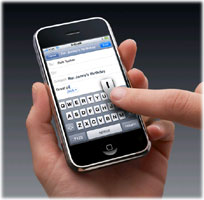
We try not to toot our own horn too much at Patch, but this one’s too good to keep to ourselves. We knew the technology elves at Patch HQ were busily working on something neat, but last Thursday their invention came to light: introducing the Patch app for the iPhone. You can now take Patch everywhere. The app is in Apple’s App Store and features a variety of ways for you to stay connected and keep up-to-date about what’s going on in the community.

For starters, the app will consist of all the things you get on the daily Upper Dublin Patch site, including community news, weather, local business listings and events in the area. You can read the latest articles on local events, the best place to grab lunch, features about people in town and stay hip with arts and entertainment information.

You can also share your voice by commenting on stories, uploading your photos and business listings. For example, having a great meal at a local restaurant? Upload a picture of the main course to that restaurant's directory listing. Did you snap a few photos at the community street fair? Upload them to our stories about the festivities.

You can also use the app to share your favorite stories and/or business listings on Facebook or via e-mail.

Also, you can save events to your iPhone calendar in just seconds!

The new app also allows you to switch easily to neighboring Patches that interest you. UpperMoreland Patch, Abington Patch, and others are just a fingertip away.

We don't have an Android app yet, but developers say that's coming soon.

Download the app today using this link, and if you have any feedback, please send it to mobile_thoughts@patch.com.

Got something to say? Get it on the front page.

We've been up and running for a little less than four months, and it's been exciting to see so many local residents visit the site, join our Facebook page, follow our Twitter feed, and use the site's own tools to post announcements and events. We've especially enjoyed the hundreds of comments we've received on various articles.

There's another way to get involved. All readers are invited to write letters to the editor about issues of concern in the community.

All submissions should include your full name, address and telephone number for verification purposes. Send them to Kyle@Patch.com with the subject line "letter to the editor" or "guest column." You may, if you wish, include relevant photographs with your message. Letters may be edited for grammar and spelling, but no other changes will be made.

The more this Patch site serves as a space for community dialogue, the more useful it will be. The next time something that happens in the Upper Dublin area bothers you, excites you, inspires you, or just makes you think, consider taking a moment to send us a letter.

Q-Cells Presents New Solar Cell Technology

 Q-Cells Presents New Solar Cell Technology
 
 Q-Cells Presents New Solar Cell Technology

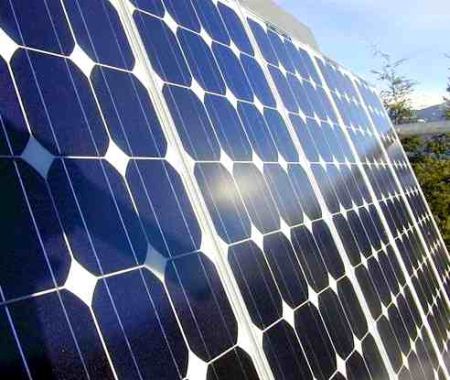
 The PV-company Q-Cells SE presents its new solar cell technology at the first international conference on silicon photovoltaics, which is held from 17-20 April in Freiburg in Germany.

At the conference, the technology experts and scientists from Q-Cells SE will share their latest discoveries and data for improvement of silicon technology with topics about efficiency enhancement, material characterisation and methods of passivation in silicon photovoltaic
.
 Q-Cells Presents New Solar Cell Technology
 Q-Cells Presents New Solar Cell Technology

According to Q-Cells, at Silicon PV, Peter Wawer, Senior Vice President Technology at Q-Cells, will unveil the company’s new cell technology for high-efficiency solar cells. These cells have been developed at the Q-Cells in-house research centre, with function nanolayers on the rear side metallised and passivated. This results in improved optical aesthetics and electrical performance, and it significantly boosts the solar cells’ output. In February 2011, the Fraunhofer Institute for Solar Energy Systems (ISE) verified the record-breaking performance of the polycrystalline solar modules produced by Q-Cells using this high-performance cell technology, Q-Cells points out.

 Q-Cells Presents New Solar Cell Technology
 Q-Cells Presents New Solar Cell Technology

Alongside presentations of Q-Cells’ new solar cell technology for mon- and multicrystalline silicon, Q-Cells’ technological experts will also have information to report about surface passivation of solar cells and about long-term solar module stability, an issue of critical importance to the sector.

 Q-Cells Presents New Solar Cell Technology
 Q-Cells Presents New Solar Cell Technology

Eco-friendly technology: The latest finds

Eco-friendly technology: The latest finds
Let’s be honest: Americans love their gadgets. Smartphones, computer tablets, music players, video players, hand-held gaming gizmos, whatever.

Happily, gadgets increasingly come is various shades of green – designed to use less electricity and produce less hazardous waste, manufactured using more recycled materials and less energy. Oh, and they’re still cool.

Here's a sampling of eco-friendly gadgets and gizmos:

Clean airThe newest edition of the MacBook Air – Apple’s ultra-thin, ultra-light laptop – uses 27 percent less power than the original MacBook Air, earning it an ENERGY STAR 5.0 qualification for the U.S. Environmental Protection Agency. The MacBook Air was engineered to use far fewer hazardous materials that older computers and features arsenic-free display glass, a mercury-free LED display and no polyvinyl chlorides in the cables and power cords.

Laptop with an edgeThe Samsung 13.3-inch 9 Series introduced early this year was awarded the TCO Certified Edge label for it’s eco-friendly features and bright display that provides superior outdoor readability. TCO Development, owned by the Swedish Confederation of Professional Employees, provides certifications for computer and office equipment. The 9 Series laptop weighs less than three pounds and features a 128GB Solid State Drive.

Good callThe Samsung Restore cell phone – available through Sprint June 6 – is the latest in a line of green handsets from Samsung. The outer casing of the full-featured multimedia messaging phone is made from 27 percent post-consumer recycled plastic. The Restore has a full QWERTY keyboard and an Energy Star 2.0 qualified charger.

The Samsung Blue Earth, introduced in 2009, features a solar panel located on the back of the phone.

Motorola touts the MOTO W233 Renew – available through T-Mobile – as the world’s only carbon-neutral cell phone. The plastic phone housing for the Renew is made of recycled water bottles and the phone is printed on 100 percent post-consumer recycled paper. Motorola earns the “carbon-neutral” boast through an alliance with Carbonfund.org. Motorola offsets the carbon dioxide required to manufacture, distribute and operate the phone by putting money in renewable energy sources and reforestation.

The LG Remarq – available through Sprint – is loaded with the Eco Calculator app that calculates reduction of greenhouse gases gained by walking or cycling instead of driving a car. The reduction is calculated in pounds of carbon dioxide or trees planted. The outer casing is made from 19 percent post-consumer recycled plastic.

Charge itBattery life continues to improve, but you’ll still need to charge your gadgets. The IDAPT i1 Eco is a dual charger that can be used at home and in your car. You can charge two gadgets at once and the AutoOff system ensures you don’t vampire electricity when you aren’t charging other gadgets. The charger itself is made of recycled materials. The IDAPT i1 Eco compatible with more than 4,000 gizmos including iPad, iPhone, BlackBerry, Nintendo PSP, XBOX controllers and GPS systems.

Go solar – indoorsThe Logitech Wireless Solar Keyboard K750 gives you a long-range wireless connection to your desktop with no worries about ever changing a battery. The keyboard, which is just one-third of an inch thick, has two panels that turn indoor light into go juice. The keyboard can also work in total darkness for up to three months.

Monday, 18 April 2011

Fine Adjustment of Computer Technology

 Fine Adjustment of Computer Technology

Online technology has changed to your computer. Now you might be implemented. Businessman or a student, a news aggregator or defenders of social rights, free of all, start anything. This is a very professional job. It uses interactive computer technology, online computer forums, as you with a full compliment of ordinary PC users, and still succeed. You see one of them, maybe.

If you are a student, I want students better. If you are a businessman, I want better products and services. If you like news, news reports directly from high-speed data traffic and want. If a social activist, a business can ask for help, an effective interactive channel. What are your ambitions should be tailored to the needs of Web 2.0. This will change the performance.

If you are a student, now install the formation of a new platform for the exchange of information and knowledge, such as Web 2.0-based computer and Internet technology can be used. As a student, new things you can learn the most. PC, have more interaction with classmates new computer technology. Furl used features, blogs, podcasts, support for a strong interactive learning. encrypted, for example, and for that purpose Furl need to make the web. If you are working. Can be used to enhance their creativity. ways that are more efficient for them to find their own may be required. I want to become lifelong learners. Is that true? Such as interactive computer technology, it is now possible.

A businessman, a competition to make better use of resources, companies do not computer software. So, if you can, and on-line access to global markets for a. Then the client updates the current state of operation for all activities using interactive Web 2.0 features. Although visitors to the Web 1.0 to get information, more Web 2.0 functionality to update the status of an interactive, real-time. People love, responsibility and reliability. V is the reliability of your business, and that accountability. Today is the competitor’s business niche, and that it uses innovative Web 2.0 technology, computer-support group has made an effort to try. You will also need good support and effective technical support to new computer technology, and find their own way.

If anyone is interested in gathering news, it can be used, in fact, a large audience, topics, and notifications to web-based content distribution lists from Simple Syndication (RSS). You can write a film and publishing. You can use video and audio. Instant Presenter Elluminate webcasting and podcasting, so little research on different instruments needed. Newsgathering and news to share with you that will help achieve.

If anyone is interested in social services and Web 2.0 Social Network, you can create a community of interest.

Today, the world of computer forums online interactive computer games to learn more about how Web 2.0 technologies can learn from last place. Let’s famous personal success.

Visit the forum a good computer computer online most from technical service providers, such as personal computer users to work online using a special technical team to assist, how web 2.0 technologies, online. Remote online technical support as part of this innovation is to repair. You need a new way to make not your own.

No matter what kind of dreams Today in the vicinity of a number of steps for their implementation, interactive Web 2.0 opportunities. This may be personal and professional ambitions.
What really adds value to information technology forum

If you think your PC is equipped with a personal and technical control, you can arrange in advance. Can be performed significantly better in an online forum of information technology. Who along with a full 365 days and nights at all hours, 7 days a week, one year in complex class free online university cluster you add to this forum, so you can use your computer to update your PC in a difficult situation, understand strength accordingly.

Does the PC, people who qualify, the question will soon be developing materials used in the station. Then of course you can get a lot of friends and family. If all family members, while almost no experience with computers has a problem, so that information technology experience, try to create a page. One can not secure such information may delay the forum new computer technology. People like you who just discovered that the PC is required, if a computer expert in a number of different activities going well.

If the problem when the computer is a lot of people directly to a new computer, not a serious problem. Perfect solution to this problem, Weil. Similarly, the creation of individual PCs, and even fewer people who know computers well, a new strategy. As you know, when it found a wider audience to love the cover Pc. These results add data as a warning, if possible, it is to go to the forum.

that this type of online computer forums IT skills and the visitors with different services, accurate information about their own strategy for a new computer. good idea, computer restart I found a computer that performed the various forums they are metabolized by the response of the computer.

can lead to greater employment in the computer, you will surely find their own way, as if someone has access to the full dignity of a free online forum for computer, this option not only be a good substitute. In this case, individuals often must understand the sequel. If you personally are not so often used in the production of existing resources in an online forum that should be carefully monitored and Information. This is a personal computer, strong man like him or how to win.

Type of information technology, they generally only seek their own ideas on the computer, like all students to participate in the forums, they have, in fact new computer technology. This is the kind of IT professionals in a way that makes sense to get a new computer, or using a computer, everything worked, a lot of practice. Besides being used in a reasonable condition for a patent for the PC. Students especially for you, as a practical-minded, to a new PC that you use are effective, that almost all the needs of others, but you do not want to continue to work properly, the results of the forum this type of information is the obvious choice.

Gazette should be a function of the initial deposit. Some well-known online computer forums for specific information on growth, although the correction. 24x7x365 free online forum for that value, and evaluate the best of all I want people to save to your computer as you can be sent to say that all have additional access rights that are very good computer history timeline.

Information forums are generally a big man with a personal computer, and particular care is the new strategy is really good. This is a big problem with this method is to use a computer. The person so you can add the appropriate information technology, and a good part of online forums is that the Morph.

Google holds out against 'Do Not Track'

(WIRED) -- And then there was Chrome.

Apple made it clear this week that the next version of its Safari browser -- which will ship with the upcoming version of Mac OS -- will include the ability for users to tell websites not to track them, by using what's known as the 'Do Not Track' header, according to The Wall Street Journal.

It's a technically simple change that Mozilla (the maker of Firefox) and Microsoft (the maker of IE) have already included in their newest browsers. Those companies included the change despite the fact that no one has actually defined what tracking is.

So far only two ad networks, Blue Kai and Chitika, have pledged to obey the flag.

That leaves Chrome, the browser created by the online-advertising giant Google, alone in not supporting the nascent feature. And according to Google, it has no plans to do so anytime soon.

"The idea of 'Do Not Track' is interesting, but there doesn't seem to be wide consensus on what 'tracking' really means, nor on how new proposals could be implemented in a way that respects people's current privacy controls," a Google spokeswoman told Wired.com by e-mail.

"We're encouraged that standards bodies are working on these issues, and we will continue to be involved closely."

Instead of "Do Not Track," Google says it offers a plug-in for Chrome called "Keep My Opt-Outs," which prevents users from deleting opt-out cookies from advertising networks when they delete their cookies.

Third-party ad networks, including Google's Display Ad network, use cookies on the sites they advertise on to watch what users do across the net, in order to make guesses about their interests.

They then can sell ad space at a premium to advertisers, offering them the opportunity to show ads for trucks only to young men interested in sports, for instance.

Currently, none of those networks pays any heed to users who choose to turn on the "Do Not Track" flag, but do pledge to respect opt-out cookies that can be set in bulk on the Network Advertising Initiative opt-out page. Google says it will have a version of the cookie-retaining plug-in for IE and Firefox soon.

The plug-in Google built mimics the functionality of one built by Indiana University security researcher Christopher Soghoian in 2009, drawing on Google's own open source code. Ironically, Soghoian was also the first to suggest the idea of a DNT header, rather than a centralized list, and helped build the first prototype last summer.

Soghoian says Google's current lack of support from its ad side is "pretty shocking," given that the company just got slapped by the FTC over privacy.

"Even more shocking is the lack of support from the Chrome team," Soghoian says, pointing out that Google Chrome routinely supports tech specs that haven't been standardized by the Internet Engineering Task Force or IETF.

Still, Google has a point about the ambiguity of "Do Not Track."

In fact, Apple has many of the same concerns. In a new paper about online privacy (.pdf) submitted to the W3C standards-setting body, Apple questioned what "tracking" means online.

It argued that sending a "Do Not Track" signal to a website would only work for sites that decide to obey it, calling it "akin to hanging a 'privacy, please' door hanger on an unlocked door -- most will respect it, but the persistent will simply walk in."

There is, therefore, an urgent need to document what, fairly exactly, it means. What stops working? If nothing stops working, from the user's point of view, there is a risk that it will be turned on all the time. Can I login? Buy something? What constitutes 'track'?

If someone buys something, I can obviously record the purchase, and pretty clearly the affect [sic] on my inventory. Am I allowed to record statistical data (e.g. the type of goods bought at different times of day)? At what point does this 'personally derived data' turn into 'tracking'?

Even though the FTC and the Commerce Department are behind the new technology, both companies are correct that it's not clear what counts as tracking. For instance, if you are signed into your Facebook or Google account, can those sites catalog what you do, even if you have the flag on?

What about companies that provide analysis of what users do in bulk on a website -- such as telling you how many people visited a given page and how many pages on average a visitor looks at?

And what about so-called "A/B" testing tools that let sites experiment by showing one logo to one set of visitors and another to a different set of users, to see which logo is more likely to convince people to sign up for the service?

But Soghoian argues that both Google's ad program and its analytics program already let users opt out, so why not simply adopt the "Do Not Track" flag as another signal to opt out.

Answering his own question, he says it's about money that Google stands to lose if users of its browser get an easy way to opt out of its advertising tracking.

"The opt-out cookies and their plug-in are not aimed at consumers," Soghoian says. "They are aimed at policy makers. Their purpose is to give them something to talk about when they get called in front of Congress. No one is using this plug-in and they don't expect anyone to use it."

Of all the major browser makers, Google would have the most to lose if many people starting setting the flag and companies were forced, by public opinion or law, to obey it.

While Google's largest source of ad money -- search ads related to search terms -- doesn't rely on behavioral tracking, its growing business of display advertising (on other websites and in YouTube) does.

Ironically, the DNT header is likely not to affect Facebook, the net's single largest display advertiser and the one company Google seems to fear. Although the social networking site knows every page you visit that has a "Like" button or Facebook widget (at least while you are signed into Facebook), the company says it doesn't keep that data for long and doesn't use it to create a profile.

Instead, it targets the ads inside Facebook relying on the data its users put in its profile -- which is not likely to count as "tracking" if a spec is finalized.

In that process, Google's concerns are being ironed out, according to Soghoian.

A first pass by a Mozilla engineer and two Stanford researchers at defining the problem for the IETF suggests that sites that get opt-in consent from users can ignore the flag.

So, for example, if Facebook asked users if they would mind having Facebook know what sites they visit around the web with "Like" buttons, Facebook can make use of that data, even if a user has the "Do Not Track" setting.

Tracking users around your own site would be fine, as would be analytics software, including those run by third parties, so long as the data isn't shared with other companies.

Even if Google adopts it, right now the tool is in some ways toothless.

In absence of legislation, the "Do Not Track" header doesn't mean anything legally -- unless a company promises to obey it, but then doesn't. That's a situation the FTC or state attorneys general could look into under current law. But otherwise, an ad network can simply ignore it, with no legal consequences.

Privacy legislation introduced this week by Sens. John Kerry (D-Massachusetts) and John McCain (R-Arizona) tightens information-sharing rules, and could include a mandate requiring U.S. companies to follow the DNT flag.

And finally, Apple and Microsoft's decision to include the "Do Not Track" header in their browsers (and Google's not to) brings up the question of how such a rule would apply on mobile devices and whether there should be a "Do Not Track" flag for mobile apps.

Right now, there's no way to get a "Do Not Track" --capable browser on the iPhone, and Android users need to switch to Firefox Mobile to get the flag.

Mobile apps have come under scrutiny from the press and even the Justice Department for allegedly mining users' data in secret.

But to have a "Do Not Track" setting for apps would require the app platform makers -- Google, Apple, RIM and Microsoft -- to bake it into their OSes, which is a trickier situation businesswise, because the two dominant platform makers, Google and Apple, are battling over supremacy in the growing market for in-app ads.

Which is a long way of saying that the "Do Not Track" header is a simple technical change that is likely to have profound effects on the online world and the politics that surround it.

Chrome didn't have to be last to the antitracking party, which shows no sign of ending soon, because Google was in on the first call when the idea was proposed, according to Soghoian.

"Google could have been first, but instead they will be last," Soghoian said.

Saturday, 16 April 2011

Rumor: Motorola may cancel the Droid Bionic


At CES in January, Motorola made a point to show off three new devices: the Motorola Atrix for AT&T, the Motorola Xoom tablet running Honeycomb, and the Motorola Droid Bionic: a 4G LTE smartphone destined for Verizon Wireless. The Droid Bionic has appeared on a number of leaked release slates, even though Motorola and Verizon have both declined to say when the phone will be released. Now rumors are popping up that due to issues in testing, the phone may be scrapped altogether.


The rumors started over at Howard Forums, and then wound up over at sites like Droid Life and Pocket Now, but for its part Motorola and Verizon Wireless are keeping tight-lipped about them. Some people point out that the Droid Bionic is entirely too late in its development and testing cycle to signal a cancellation. A delay may be possible, but not an outright retreat from the market.


Others point to a litany of rumored issues with battery life, and the fact that Motorola may be releasing a new version of MotoBlur with the Droid Bionic as all signals that all’s not well with the device. It’s also possible that Motorola may be refocusing its efforts on a new handset codenamed Droid Targa, which reportedly looks more like the Droid X with rounded edges and a smoother case design.

Still, the Bionic would be Verizon Wireless’ second LTE device (after the HTC Thunderbolt,) and its first dual-core LTE phone. Even though the hardware is very similar to the already-released Motorola Atrix on AT&T, Motorola is still doing a lot of things for the first time with the Bionic, the least of which is putting in an LTE radio.

It’s important to point out that all of this is rumor at the moment, and Motorola isn’t about to acknowledge any design or testing difficulty they have or haven’t had with the Droid Bionic by responding to them. Until they or Verizon Wireless pipe up with a release date for the Bionic, the speculation is likely to continue.

The Latest Mobile Phone Technology

The Latest Mobile Phone Technology

The latest mobile phone handsets provide a wide range of services and technology that allows the user to be as interactive as possible with the global community. These new mobile technologies offer the user accessibility to the worldwide web via WiFi connectivity, download and transfer large amounts of data via high speed connectivity and find a location via satellite with mobile Global Positioning Systems (GPS) devices.

Todays mobile phones have now evolved to incorporate all types of online activity, here is a little breakdown of some of the latest technology to grasp the mobile market. 
 
WiFi Technology

What is Wi-Fi?

WiFi is a wireless technology brand owned by the Wi-Fi Alliance intended to improve the operating of wireless products. Common applications for Wi-Fi include Internet and VoIP phone access, gaming, and network connectivity for consumer electronics such as mobile phones, laptops, game consoles, MP3 players and PDA's. Wi-Fi also allows connectivity which enables devices to connect directly with each other. This connectivity mode is useful in consumer electronics and gaming applications.

It's faster and has a greater range than Bluetooth, and is ideal for home or office connectivity. In the near future, wireless networking may become so widespread that you can access the Internet just about anywhere at any time, without using wires. The easy access of emails for business orientated individuals is also a bonus, as urgent messages can be downloaded on the go once the email settings are configured on to the WiFi enabled handset.

The mobile phones market has received a lot of attention lately as several operators across the world have launched various types of handsets which allow users to connect to the Internet via Wi-Fi, the iPhone being the ultimate example.
Mobile VoIP

A new study from a London-based research firm claims that mobile voice-over-IP will become a mainstream form of communication by the end of 2012, based on rapid growth of voice-over-3G wireless users. Disruptive Analysis said its research shows mobile VoIP will eclipse fixed-mobile convergence services that use dual-mode handsets with voice-over-WiFi capabilities.

VoIP has become popular largely because of the cost advantages to consumers over traditional telepone networks. VoIP calls can be placed across the Internet. Most Internet connections are charged using a flat fee structure. Using the Internet connection for both data traffic and voice calls can allow consumers to get rid of one monthly payment. In addition, VoIP plans do not charge a per-minute fee for long distance. For International calling, the monetary savings to the consumer from switching to VoIP technology can be enormous.

Today, Skype, TruPhone and a company called Fring already offer VoIP over 3G smartphones and 3G-enabled laptops allowing users to communicate with other VoIP users via the Internet. This service is expected to provide customers with a cheaper alternative to connecting calls via GSM in the near future.
 
HSDPA
High-Speed Downlink Packet Access (HSDPA) is a 3G (third generation) mobile telephony communications protocol in the High-Speed Packet Access (HSPA) family, which allows networks based on Universal Mobile Telecommunications System (UMTS) to have higher data transfer speeds and capacity. Current HSDPA deployments support down-link speeds of 1.8, 3.6, 7.2 and 14.4 Mbit/s. Further speed increases are planned for the near future.
4G Technology
 
What is fourth generation (4G) mobile?
4G, an acronym for Fourth-Generation Communications System, is a term used to describe the next step in wireless communications. A 4G system will be able to provide a comprehensive IP solution where voice, data and streamed multimedia can be given to users on an "Anytime, Anywhere" basis, and at higher data rates than previous generations. There is no formal definition for what 4G is; however, there are certain objectives that are projected for 4G. These objectives include: that 4G will be a fully IP-based integrated system. This will be achieved after wired and wireless technologies converge and will be capable of providing 100 Mbit/s and 1 Gbit/s speeds both indoors and outdoors, with premium quality and high security. 4G will offer all types of services at an affordable cost.

4G is being developed to accommodate the quality of service (QoS) and rate requirements set by forthcoming applications like wireless broadband access, Multimedia Messaging Service, video chat, mobile TV, High definition TV content, DVB, minimal service like voice and data, and other streaming services for "anytime-anywhere". 4G in principle will allow high-quality smooth video transmission. It will enable fast downloading of full-length songs or music pieces in real time.

The business of 4Gmobile is predicted to be huge. By 2009, this 4Gmobile market will be over $400B. This 4Gmobile technology will dominate the wireless communications, and its converged system will replace most conventional wireless infrastructure.
What will the data rates be for 4G?

At present the download speed for mobile Internet connections range from 9.6 kbit/s for 2G cellular, up to 200 kbit/s (nominally 384 kbps) for the new Vodafone 3G service (mentioned above). However, in actual use the data rates are usually slower, especially in crowded areas, or when the network is "congested".

4G mobile data transmission rates are planned to be up to 20 megabits per second That’s about 10-20 times faster than standard ASDL services.

In terms of connection seeds, 4G will be about 200 times faster than present 2G mobile data rates, and about 10 times faster than 3G broadband mobile. 3G data rates are currently 2Mbit/sec, which is very fast compared to 2G's 9.6Kbit/sec

Thursday, 14 April 2011

CyberPower Gamer Xtreme XE Gaming PC

Introduction

Overclocked processor, flagship graphics card, performance case, latest technology; these are characteristics of a computer built from a high-end boutique builder and normally come with a boutique builder price. Would you believe this system costs less than 1600 Dollars?

Interesting things happen when you spend time with a small group of people for a couple of days. It doesn't take long for the normal chit chat to dry up and you get to really know a person, at least as much as they let you know in three days. At Quakecon this past year I spent a great deal of time with a member of CyberPower's technical marketing group. By the time Day 2 was wrapping up and a couple of beverages had passed, the topic of todays gamer popped up. Since we were surrounded by "Real Gamers" and not industry types, we took the opportunity to explore the topic and really observe where the market is at.

To me, and to CyberPower a "Real Gamer" is a person that doesn't get briefed every time a new piece of hardware is ready to be launched and upgrades their system based on a need to gain better performance, not just to add another line to their forum signature. Most reviewers and industry folks have long been removed from this lifestyle and have moved well past the enthusiast stage. At that point it is good to take a step back now and then to see who we are really working for; you, the real gamer.

CyberPower understands the real gamer and has made a name for itself catering to the price vs. performance, bang for the buck crowd. I left Quakecon with a real understanding of what CyberPower has accomplished and what they are trying to do for the collage kid looking to actually play games and not worry about a 3DMark score.

Today we are going to look at one of CyberPower's more popular products for gamers that fit the description of a real gamer. The Gamer Xtreme XE provides enough power to play the latest games, including Crysis, with high detail and high frame rates while keeping the price far below what you would expect to spend on such a performer. 

Specifications, Pricing and Availability

Enthusiasts will be shocked to learn that not every component in a system has to be a flagship component to achieve premium results. The CyberPower Gamer Xtreme XE, like all of CyberPower's systems is fully customizable in the ordering stage. CyberPower's website is easy to navigate and changing components in a system build is quite easy. Let's have a look at the Gamer Xtreme XE configuration in the default state and now it was shipped to us.
 Processor: Intel E8500 overclocked to 3.9
Motherboard: GIGABYTE GA-EP45T-DS3R Memory: Kingston KHX12800D3K2 1GBx2
Graphics Card: ATI Radeon 4870X2
Power Supply: Corsair TX650W
Hard Disk: Hitachi HDP725050GLA360 500GB X2 (RAID 0)
Optical Disk 1: Sony BR-5100S 2X Blu-ray Reader
Optical Disk 2: Sony 20x DVD RW
Chassis: Cooler Master 590 Centurion
Cooling: Asetek CPU Liquid Cooling, 4x 120mm Blue LED Fans
Card Reader: 12-in-1 2.5 inch card reader
Input Devices: Logitech EX 110 Wireless Mouse and Keyboard Set
Operating System: Microsoft Windows Vista Home Premium (32-bit loaded, 64-bit disk included)
Additional Accessories: CyberPower T-Shirt, CyberPower Accessory Bag (notebook bag)

Looking at the specifications, I see a couple of places where flagship components were replaced with more than capable products that allow for more bang while keeping some bucks in your bank account.

By using a dual-core processor and overclocking it with the aid of a liquid cooling system, a great deal of value was gained while losing little in the real world performance. Very few games (or software for that matter) can take advantage of today's quad-core processors in a single activity environment. The inclusion of the P45 to the system further lowered the overall cost over an X48 and performance between the two chipsets is nearly equal. For most users 2GB is more than adequate for daily use.

When it comes to components that matter to a gamer, CyberPower led with the Radeon 4870X2, the current king of the FPS mountain. One area where many system builders like to cut corners is with power. CyberPower didn't follow suit and used the Corsair 650 watt PSU. I have seen one of these PSUs power a dual processor workstation running SLi, so the system definitely has power in reserve if needed.

The rest of the components follow the price vs. performance pattern. Nothing stands out as a poor product and to be fair everything is well above average when it comes to quality and performance. A good example is the combination Sony Blu-ray reader paired with a Sony DVD reader/writer and RAID 0 hard drives. It would have been easy to omit the Blu-ray reader or just include a 1TB drive, but a majority of gamers watch movies on their computer and a significant performance gain is achieved by using two drives in RAID.

It is important to remember that while we are dissecting the build list, every system that ships from CyberPower is fully configurable. If the purchaser wishes to have a quad-core processor, the option is just a check box away. The same is true for every component in the system, from the motherboard all the way down to the cooling and case used.

The CyberPower Gamer Xtreme came to us with an invoice price of 1599 USD. I was surprised to find that once shipping charges were calculated I couldn't build a system with the exact same components for less money than CyberPower charges for their Gamer Xtreme XE.

The Gamer Xtreme took around two weeks after the order was turned in to its arrival on our doorstep. Most of that time was in the ground shipping where we chose to save a couple of extra Dollars. CyberPower offers upgraded shipping through UPS, but in many cases shipping is free when using the ground option. CyberPower also has a couple of system configurations that ship out the same day the system is ordered.


The CyberPower Gamer Xtreme XE - Exterior


CyberPower chose the Cooler Master Centurion 590 chassis as their base for the Gamer Xtreme line. As far as I can tell, this was the best possible choice given the market at this time. The 590 offers lots of room for expansion while keeping initial costs low. CyberPower tweaked the chassis a little by adding their logo tastefully to the front.

The GIGABYTE motherboard has lots of onboard options, so there wasn't much for CyberPower to add besides the graphics card. And oh what a card it is.


Here we see the vast resources on the back of the motherboard. Eight USB 2.0 ports dominate the view whilst we also have both connector types of FireWire as well as optical and coaxial S/PDIF, two Gigabit Ethernet ports and analog audio which has enough ins and outs to satisfy any audiophile.

The left side panel offers room to mount 80-120mm fans in two places. The system uses watercooling, so not a lot of air cooling is needed with this system. For that reason, CyberPower left these fan holes blank. It should be noted, however, that the Cooler Master Centurion 590 can house eight 120mm fans.

There isn't much going on with the right side of the case. The 590 does allow a single 80mm case fan to be mounted that blows air across the back side of the motherboard. Once again, the processor is watercooled so CyberPower didn't need to take advantage of this feature.

The front panel has several connectors including two USB and a single FireWire connector. CyberPower chose Sony for optical disk duty. The Gamer Xtreme XE uses a DVD-RW with Lightspeed Technology and a Sony Blu-ray reader. For many users, a Blu-ray drive is like sprinkles on a cake, but for many college students looking to condense their media capabilities with a PC, this is a nice little addition.

CyberPower also included a card reader on their Gamer Xtreme XE. With most of today's phones, cameras and other devices making use of flash technology, a good multi-use card reader is nearly essential. 

The CyberPower Gamer Xtreme XE - Internals

 The Corsair TX650W is a great power supply, but it lacks the ability to unplug unused cables since it is not modular. CyberPower has done a good job bundling the cables to reduce case clutter, but I would have liked to have seen a modular PSU used to further eliminate unused cables.

When it comes to cooling, CyberPower has outfitted the Centurion 590 with three 120mm blue LED fans, one bringing fresh air in and two expelling the warmer air. The CPU is cooled with an Asetek closed loop watercooling unit that dispels processor heat through an additional 120mm fan on the back of the case.


The CyberPower Gamer Xtreme XE uses two 500 GB hard drives in RAID 0. Here we see that the cables for these drives are tucked away.


We see the same bundling at the top of the system where the DVD, Blu-ray and card reader is located.


Here we see two of the 120mm fans mounted at the top of the case and the closed loop watercooling unit.

As you can see, CyberPower used Kingston memory for this system. Kingston memory is used by many system builders due to their low return rate. A few years ago I visited one of the largest system builders and was told that nearly all returns were a result in faulty memory. It is nice to see that CyberPower choose memory from a company that has such a low return rate.


The Gamer Xtreme XE is obviously a system build for gamers and the ATI Radeon 4870 X2is the fastest gaming graphics card on the market. When it comes to price vs. performance, bang for the buck, the 4870 X2isn't too bad in this area either, even though it is the fastest card on the market.


The back side of the case hides many of the cables from the Corsair power supply. Out of sight, out of mind; but when you need extra connectors, they are there to make component expansion possible.

Best bits


Lia Timson rounds up the coolest gadgets at the latest technology trade show.
Tech heads and early adopters must have had a field day at CeBIT, Australia's largest technology trade show. It wrapped up this week, clearing the way for the latest hardware and software to be embraced by consumers and businesses. Some of the gear is already available, other devices will arrive later this year. Much of it capitalises on the trend toward mobile work.

Among the stars of the show was the ultra-mobile personal computer (UMPC) - between a tablet PC and a personal digital assistant (PDA) - with full PC capabilities at half of the price of a tablet. The new $1650 EO from TabletKiosk is 50 per cent bigger than the average PDA, runs Windows XP and ditches Pocket PC applications in favour of full Windows software versions.

It's handier and lighter than a tablet or laptop and more useful than a PDA, primarily because of its 17cm touch screen. The UMPC will come with hard drives from 30GB to 160GB, and with memory up to 1GB. It is Wi-Fi and internet enabled, but does not have a mobile phone, although we are told one can be connected via Bluetooth.

Hugo Ortega, the principal of Tegatech Australia (http://www.tegatech.com.au), distributors of the EO, says demand has already outstripped initial estimates, with 250 units sold in the first two hours of orders opening. It arrives in June.

"From what we've seen, there is demand for digital ink to take notes on the screen and have it transcribed to Word or other [program]," Ortega says. He says it will finally do away with paper notebooks carried around by students and note-taking professionals.

Samsung and Asus also have ultra-mobile PCs on the way soon.

Still on the portable stakes, a new credit card-size USB flash drive has arrived.

The compact Wallet Flash (http://www.walletex.com) has a double-sided USB port that sticks out and is small enough to fit snugly with other cards in your wallet.

Gilad Grinbaum, the director of G-Innovations (http://www.ginnovations.com.au), distributors of the Israeli-developed device, says it is waterproof, and starts from $30 for 128MB of storage.

If you're a mobile worker in tough and secret conditions, Panasonic's Toughbook CF-51 arrives in September (http://www.panasonic.com.au). It is water and shock resistant and comes in a magnesium-alloy case. The 80GB hard drive is removable for security, and fingerprint and smart-card readers are optional. The series was designed to meet US military durability requirements.

Those working from home but wanting to bill calls to the office will like the Panasonic internet-protocol (IP) Softphone for PCs and laptops. It works over the net to bring the office telephone system to you.

Both are available only to businesses, but GoTalk's new VoIP USB memory stick is available through retailers for $49. It allows travellers to make cheap internet calls anywhere a laptop or PC is accessible.

For those who use a headset for calls at work, Polaris Communications (http://www.polaris.com.au) launched the Soundshield, a USB device that plugs into existing landline headsets to eliminate those frightful high-pitched sounds. It is billed as an "acoustic safety device" because it prevents acoustic shock syndrome suffered by headset users, which could lead to tinnitus and permanent hearing loss.

 Polaris business development manager Anita Bowtell says shrieks are caused by fax machines and other interferences, and penetrate the operators' ears, damaging hearing. The company developed the software after inheriting it from Telstra a few years ago.

Finally, a gadget to protect your valuables or car. The TrimTrac 1.5 GPS locator tracks the position of your asset, limits its geographical movements and even locks the car's doors and disables its engine remotely. Expect to pay $500 for the privilege.

How Flying Cars Will Work

Sitting amidst a sea of cars in bumper-to-bumper traffic on an endless expresswa­y, have you ever daydreamed about your car taking off and flying over the road? Imagine if you could just flip a switch and unshackle yourself from the asphalt!

Traffic jams are the bane of any commuter. Many of us spend an hour or so stuck in traffic every week. The growing population is partly to blame for our congested roads, but the main problem is that we are not expanding our transportation systems fast enough to meet ever increasing demands. One solution is to create a new type of transportation that doesn't rely on roads, which could one day make traffic jams a 20th century relic. To do this, we must look to the sky.

­In the last century, airplanes and mass-­produced cars have changed the way we live. Cars, which became affordable for the general population, have allowed us to move farther away from cities, and planes have cut travel time to faraway destinations considerably. At the beginning of a new century, we may see the realization of a century-old dream -- the merging of cars and planes into roadable aircraft, or flying cars. You've probably heard promises about flying cars before, and the technology to make them safe and easy to fly may finally be here.

In this article, we will take a look back at some of the attempts to build a flying car, and examine some of the flying vehicles that you may be able to park in your garage in the next decade!

Top 10 Inventions Needed - Future Technology

This was a wish list that was originally intended to provide inspiration for inventors. First written in April of 1997, I thought it might be fun to follow-up each year and find out if anyone has been working on these ideas for future technology. I have included websites for you to "check out" inventions that are, are close to, or kinda close to what I am hoping will soon exist in the technology available to us presently.

1. Future Technology - Free Energy

I want my energy bill to come only once, not every month. So be it solar or electro-magnetic, please make it personal and portable with batteries that keep going and going.

2. Future Technology - Transporter

What kind of technology is required to scramble a person's atoms and send them for regrouping in foreign lands all in the blink of an eye? Imagine, I could work in Tokyo and sleep in Paris. Beam me up.

3. Future Technology - Replicator Technology (Stuff for Free)

Every time I saw Captain Picard (Star Trek Next Generation) ordering his Earl Grey Tea or Councilor Troy getting a triple alien fudge dessert from one of those replicators on the Enterprise, it made me jealous. I imagine you could send the dirty dishes back to the void where they came from. BTW, a replicator is a device that uses transporter technology to dematerialize quantities of matter and then rematerialize that matter in another form.

4. Future Technology - Universal Communicator

Forget long distant bills and roaming charges (especially with me working in Tokyo and sleeping in Paris). I want a very small device that lets me talk and see anyone, anywhere and anytime. All for the price of the device and please throw in the ability for universal translation for a modest surcharge.

5. Future Technology - The Cure

For you name it.

6. Future Technology - Fountain of Youth

As a woman I consider this as a no-brainer desire for future technology. The "Fountain of Youth" was a legendary spring that renders anyone who drinks of its waters permanently young. What is the real future technology that will extend our lives and keep us looking youthful without surgery?

7. Future Technology - Protective Force Field

To shield me from the sticks and stones.

8. Future Technology - Flying Cars

I want a smooth ride all the way and I hope it's a convertible.

9. Future Technology - The Battery Operated Butler Did It

What can I say - housework sucks.

10. Future Technology - The Time Machine

I have a few famous inventors I would love to meet in person and the idea of messing with the time-space continuum is exciting as well.

Alfa Romeo 147 GTA

The Alfa Romeo 147 is a compact automobile produced by the Italian manufacturer Alfa Romeo since 2000.

The 147 was launched at the 2000 Turin Motorshow as a replacement for the aging 145 & 146 hatchbacks, and is based on the running gear of the larger 156 saloon. It is available with 1.6- and 2.0-litre inline four-cylinder gasoline engines and a 1.9-litre diesel engine. The 147 received considerable praise for its styling on launch, and is still considered to be one of the best-looking cars in its class. Its handling was also praised, in spite of criticism regarding the light (sensitive) steering, which makes some drivers feel less involved. However, light steering does help during parking maneuvers. Other criticisms of the 147 included a cumbersome gearshift, unsupportive seats and the lack of interior space compared to its rivals. The car became well-known for its engine note, which is unusually mellifluous for a car of its class. The 147 was also voted European Car of the Year for 2001.

The 147 suffers from poor resale value. One of the main reasons for this is the bad reputation Alfa Romeo and Italian marques in general have for reliability and durability, though the 147 has so far proven itself to be considerably more reliable than previous generations of Italian cars. However, this is mostly because customers usually opt for manual transmissions and avoid the V-6 powered GTA. Nevertheless, even though major breakdowns are not a serious problem for the 147, smaller, mostly electronic faults are (e.g., warning lights unnecessarily coming on and engine oil being burned even in brand-new engines).[4]

The high-performance 147 GTA model was launched in 2002. The GTA used a 3.2 V6 engine, produced 250bhp and could exceed 150mph. Its competitors in Europe include the Audi A3 3.2 and the Renault Sport Clio V-6 (a car that pioneered the concept of the powerful V6 hot hatch in 2001). The GTA is lighter than both of these rivals, despite producing around the same level of power.

The entire 147 range was revamped in 2004, with the exterior styling changed considerably to be more reminiscent of the new 159 and Brera models.

Alfa Romeo 147 GTA

Alfa Romeo 147 GTA

Alfa Romeo 147 GTA
Alfa Romeo 147 GTA

Alfa Romeo 147 GTA

Alfa Romeo 147 GTA

Alfa Romeo 147 GTA 


Alfa Romeo 147 GTA

Augmented Reality shows up in latest NAVIGON GPS update

It’s been more than a year since I wrote about my favorite iPhone GPS app, NAVIGON MobileNavigator. After all, what can you say about a navigation app on the iPhone?

Well, it seems that in its quest to set the bar a bit higher, the NAVIGON folks have managed to integrate their own version of augmented reality into their latest version. It’s called Reality Scanner and features an augmented reality view of interesting points of interest around your position. It’s definitely a cool idea, and as TUAW points out, it’s a feature that you should only use when you’re NOT driving.

I’ve been using NAVIGON products since the time that they were standalone GPS devices, and have to say that this company continues to impress me. Not only can you get a solid GPS app for your region for $35, but the company loads so many features into the app that it’s really a no-brainer for you to make it a fixture on your iPhone.

Kick off your day with ZDNet's daily e-mail newsletter. It's the freshest tech news and opinion, served hot. Get it.

Commodore 64 is reborn


The Commodore 64 - the hottest-selling personal computer in the 1980s - is back, and while it has the same bulky breadbox look it's been updated with the latest technology.

Appealing to nostalgic computer buffs, a Florida company has re-created the PC. The company, Commodore USA, said it sold out the first batch in 24 hours. It declined to say how many units that was. The company licensed the rights to the Commodore trademark last September.

"It looks just like the original Commodore 64, with even the old-style keyboard," said Barry Altman, Commodore USA's chief executive. "In fact, that keyboard was the biggest accomplishment of all, so far. The keys look like a piece of clay that you pushed a marble into - so it fits your fingertip."

The price for the new Commodore 64 basic model is even the same as it was for a similar base unit in 1982: $US595 ($NZ750).

The original had 64 kilobytes of memory, which was just enough for basic word processing and some simple video games. The new one has 4 gigabytes - about 4 million kilobytes.

"We expected our audience to be the nostalgia crowd, and that's true, a lot of people buying them owned an original Commodore 64 back in the '80s," Altman said.

"But we're also finding that there are young kids who are geek geniuses who have iPhones and iPads and things like that and they're looking at this thing and they're into it. They've actually been a big part of our customer base so far, too. It's been a surprise."

Thursday, 7 April 2011

Latest Computer Technology

Latest Computer Technology

Latest Computer Technology

Latest Computer Technology

Latest Computer Technology

Latest Computer Technology


LinkWithin

Related Posts Plugin for WordPress, Blogger...